Radon Tunes for Apple Music
- 2.2
- Rating
- 500.00K
- Installs
- Free
- Price

 Analysis by App-foxy
If you want to enjoy Apple Music on a television rather than keep your listening limited to a phone or computer, Radon Tunes is built around that simple idea. I approached it as a first-time user would: install it, work out what it actually does, and see whether it makes everyday listening easier. The experience is more specialized than a full music service, so your expectations matter from the start.
Radon Tunes is a free music and audio app from TrieFly LLC, with a Everyone content rating and support for devices running Android 5.0 or later. Its store summary is brief, but the practical takeaway is clear: this is intended to bring an Apple Music listening experience to a TV. I found that focus both useful and limiting. It is useful when the television is the place where I already want to listen; it is limiting if I am looking for a complete replacement for the main Apple Music apps across every device.
The app has attracted over 500 thousand installs, although its average rating is 2.2 from around 1.2 thousand ratings. That combination immediately tells me to treat it as a tool with a specific purpose rather than an automatic recommendation for everyone. It is free to start, while in-app purchases are listed at $3.99 per item, so I would pay attention to any purchase prompt and decide whether the extra value fits my own setup.
You May Also Like

 Blood Strike: 2.5 Anniversary
Blood Strike’s Loadouts Turn Every Drop Into a Tactical Gamble
A close look at Blood Strike’s custom loadouts: how fast access to signature weapons reshapes its battle royale rhythm, rewards preparation, and narrows the gap between fights.

 Pandora - Music & Podcasts
Pandora’s Music Is Easy to Start, but Harder to Recover
Pandora’s strength is its low-effort path from a seed to a station. Its weak spot is how much confidence it asks you to place in connection, setup, and quiet recovery.

 8 Ball Pool
 Is Built on Rivalries, Rematches, and Routine
A close look at the rivalries, rematches, shared routines, and unanswered safety questions that turn a quick pool match into a persistent mobile community.

 Samsung Music
’s Quiet Strength Is Playing What You Already Own
Its reach comes less from spectacle than from dependable access to a personal library. That simplicity is both the app’s strongest retention engine and its ceiling.

 AccuWeather: Weather Radar
AccuWeather Review: A Quick, Clear Forecast for Everyday Decisions
For everyday plans, the best forecast is the one you can understand quickly. AccuWeather makes rain timing, radar, and local conditions easy to act on, with a few trade-offs.

 Hill Climb Racing
Why Hill Climb Racing Still Turns Crashes Into One More Run
A tiny car, a bumpy hill and one more upgrade: Hill Climb Racing keeps resurfacing because its simple chaos makes every near-miss feel personal.
More From Our News Desk
View All News


What to expect before you begin
The most important thing to understand is that Radon Tunes is not something I would choose simply because I need another general-purpose music player. If I am listening through headphones while walking, the regular Apple Music app on my phone is the more natural choice. If I am organizing a large library, managing downloads, or switching between several personal devices, I would also begin with Apple’s usual apps.
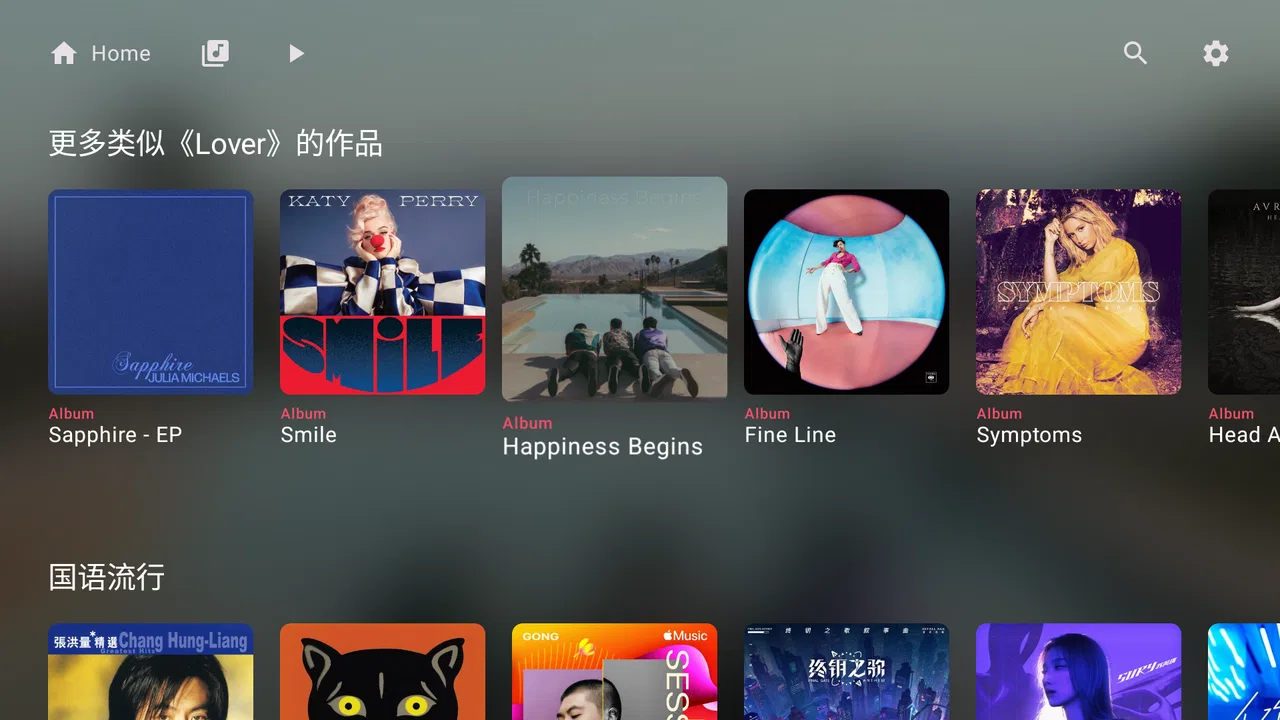
Radon Tunes makes more sense in a living room, bedroom, kitchen, or other space where a TV is already the central screen. The benefit is not just having sound come from a larger device. A television can make browsing and controlling music feel more communal, especially when I am playing something for other people and do not want to pass a phone around. It can also reduce the small-screen friction of searching while sitting farther away.
That focus creates a useful decision rule: choose Radon Tunes when the television is the problem you are trying to solve. Do not install it expecting the same role as a complete mobile music hub. This distinction saved me from judging the app unfairly. A focused TV companion can be worthwhile even when it would be unnecessary on a phone.
The current version is 2.6.0, and the app was released on May 6, 2025. I would still approach the first launch patiently, because TV-oriented apps depend heavily on the particular device, remote, and account arrangement being used. A setup that feels obvious on one television may require more attention on another. That is not a reason to abandon the app immediately, but it is a reason to start with a short test rather than plan a long listening session around it.
Who gets the most from it
I see the strongest fit for someone who already uses Apple Music and wants a more comfortable way to enjoy it from a TV. It may also suit a household where music is shared, because a larger display can make the current listening activity easier for people in the room to follow. The app is especially appealing when the alternative is repeatedly unlocking a phone, squinting at small controls, or trying to keep a mobile device available as a remote.
There is less reason to choose it if your main need is offline listening, private headphone playback, detailed library management, or seamless use while moving between locations. In those cases, the standard Apple Music experience is likely the better starting point. I would also skip it if you do not have a compatible TV setup or if you want a broad, service-independent player rather than something aimed at Apple Music.
Getting through the first setup
I recommend beginning with the television already connected and ready for ordinary use. Keep the phone or another familiar device nearby, but do not assume that every part of the process will be handled from the phone. The most reassuring approach is to treat the first launch as a connection check: open the app, read each screen carefully, and identify where account access or playback control is expected before trying to build a queue.
Because the app’s purpose is tied to Apple Music on a TV, the first meaningful milestone is not merely seeing the app open. It is reaching a point where the television can present music in a way you can control comfortably. If a sign-in or pairing step appears, use the Apple Music account you actually intend to listen with. Mixing accounts during the first attempt can make a simple setup feel more complicated than it is.
I would also keep the first test deliberately small. Choose one familiar album, playlist, or song rather than attempting to search through your entire library immediately. A known selection helps separate two different problems: whether the app is connected correctly and whether a particular item is easy to locate. This is one of the most useful habits with TV apps, because it gives you a clear success signal instead of leaving you wondering whether a failed search means the connection itself is broken.
Distance matters in a practical way. If the television is across the room, small interface details can be harder to interpret than they are on a phone. I found it helpful to sit where I would normally listen, not directly in front of the screen during setup. That reveals whether the text, navigation, and playback controls are comfortable in the real environment. If the interface only feels manageable up close, the app may not improve your routine as much as expected.
Another useful precaution is to avoid judging the experience while several people are trying to control it at once. For the first launch, I would let one person handle navigation and confirm that playback works. After that, invite others to use it. This makes it easier to understand the app’s normal flow before household habits introduce extra remote presses, account changes, or competing choices.
The first successful action
For me, the first real success is starting a familiar track on the TV and then changing something without returning to the phone. That could mean pausing, resuming, moving to another selection, or adjusting the listening flow from the television interface. The exact action matters less than proving that Radon Tunes is useful after the initial launch, not merely present on the screen.
Once that works, test the app during a realistic moment rather than immediately exploring every option. Put on background music while preparing dinner, for example. Start with a playlist you already know, leave the phone aside, and see whether the television remains easy to control while you move around the room. This scenario exposes the practical strengths and weaknesses much faster than a desk-based inspection.
In that situation, the app’s value comes from reducing interruptions. I do not need to stop what I am doing to search on a small screen, and other people can see what is playing on the shared display. The trade-off is that TV navigation can feel slower when I want to make a precise change. For casual listening, that balance may be fine. For careful playlist editing, I would still return to the regular Apple Music app.
A second good test is a short shared listening session. Let another person choose the next selection while you remain near the TV. This shows whether the app fits a household routine or whether it creates more handoffs than it removes. I would not judge it solely by how attractive the interface looks; the real question is whether the people in the room can understand what to do without constant explanation.
My advice is to establish one dependable routine before considering any paid option. Since the app is free and lists in-app purchases at $3.99 per item, I would first confirm that the basic TV listening experience solves a problem for me. Paying before that point would make it harder to tell whether I value the app itself or simply hope an extra purchase will fix an unsuitable setup.
Common confusion and practical limitations
The first likely confusion is assuming that a TV-focused Apple Music app should behave exactly like the phone version. I would not make that assumption. A television interface has different priorities: readable controls, remote-friendly movement, and visibility from a distance. That can make ordinary browsing feel less direct, especially when I already know where something is on my phone.
A second point is the difference between access and ownership. Installing Radon Tunes does not automatically change what music an Apple Music account can play. The app is a way to use the service in a TV setting, not a substitute for the account or catalog arrangement behind it. If a selection is unavailable through the account being used, changing the TV app alone is unlikely to solve that issue.
It is also easy to confuse a successful installation with a successful connection. Seeing the app’s opening screen tells me very little about whether my intended listening workflow is ready. I would always go one step further and start a known track. If that works, I would then test a basic control from the TV. This two-stage check is quicker and more informative than repeatedly reopening the app.
Remote control habits can create their own friction. On a phone, I can tap directly on a visible control. On a television, I may need to move through items with directional buttons, and one extra press can take me somewhere unexpected. I learned to slow down during the first few minutes and watch which item is highlighted before confirming it. That small adjustment makes the interface feel much less mysterious.
Another trade-off involves who controls the listening session. A TV is shared, which is a strength when everyone wants to participate, but it can be inconvenient when one person wants private control. If I am trying to listen quietly or make frequent personal changes, headphones and the standard mobile app remain more appropriate. Radon Tunes is at its best when the screen and sound are part of a common room experience.
The rating of 2.2 is worth taking seriously, but I would not use it as the only verdict. Ratings can reflect different devices, expectations, account situations, and attempts to use an app outside its intended role. Still, it is a clear reason to test the core workflow before relying on Radon Tunes for an important event. I would install it ahead of time, verify that a familiar track plays, and keep a backup listening method available.
How it compares with the usual alternatives
The obvious comparison is the standard Apple Music app on a phone or tablet. That option is better for mobility, private listening, detailed searching, and quick personal control. Radon Tunes has the advantage when the television is the preferred destination and the goal is to make music visible and accessible in a shared space.
Screen casting or using a built-in TV music application may also be more convenient for some people. Those alternatives can avoid adding another dedicated app, but they may involve extra steps each time playback begins or may not feel as integrated with the TV itself. Radon Tunes is worth considering when you want a direct TV-oriented route rather than repeatedly sending content from another device.
There is no universal winner here. If I am hosting a relaxed evening and want a playlist playing in the background, the TV-centered approach can be more comfortable. If I am commuting, exercising, editing a carefully ordered queue, or listening alone with headphones, I would choose the usual Apple Music tools. The right choice depends less on the music catalog and more on where control needs to happen.
I would also compare the cost carefully. Radon Tunes is free to install, which makes a trial easy, but the listed in-app purchase price means the long-term value depends on what those optional items provide in your use. I would not assume that paying makes the app equivalent to a full Apple Music subscription or that it replaces any separate service requirement. Treat the purchase as an app-specific decision and check the wording on screen before confirming it.
My next-step recommendation
After the first successful track, I would create a simple personal test: use Radon Tunes on three different occasions. Try one quiet solo session, one background-listening moment, and one shared session with another person. Notice whether the TV controls remain comfortable, whether finding familiar music feels reasonable, and whether the app reduces or adds interruptions. Those observations are more useful than a quick launch followed by an immediate rating.
If it works well in those situations, keep the workflow simple. Use the phone for discovery and detailed organization, then use the TV experience for playback when you want the larger screen and shared room. This division of labor is, in my view, the most sensible way to use the app. It avoids forcing a TV interface to handle tasks that are naturally easier on a touchscreen.
If the first connection is troublesome, I would restart the process from the smallest possible test rather than changing several things at once. Confirm the account, choose one familiar selection, and verify playback before exploring anything else. If the app still does not fit the television routine, switching back to the regular Apple Music app, casting method, or built-in alternative may be the more practical answer. A music tool should reduce friction, not become another project.
Radon Tunes is therefore a focused recommendation, not a blanket one. I like the idea of bringing Apple Music into a TV-centered routine, and I can see the appeal for households that want music to be part of the room rather than something controlled privately from a phone. At the same time, the low average rating, the specialized purpose, and the possibility of setup friction mean I would test it carefully before depending on it.
For a first-time user, the safest path is straightforward: install the free app, connect it using the intended Apple Music account, play one familiar selection, and test a basic control from the TV. If that first meaningful action feels natural, Radon Tunes may earn a place in your living-room routine. If it does not, the standard Apple Music experience remains the better choice for most personal listening. Its value is not in replacing every music app; it is in making one specific TV listening situation easier.
FAQs for Radon Tunes for Apple Music
01What is Radon Tunes for Apple Music?
Radon Tunes is a third-party companion app designed for Apple Music users who want a different way to browse, organize, and enjoy their music library. Depending on the version and platform, it may provide tools such as alternative navigation, playlist management, discovery features, or playback controls. It is not a replacement for an Apple Music subscription, and access to some features may depend on Apple’s services and account permissions.
02Do I need an Apple Music subscription to use Radon Tunes?
In most cases, you should expect to need an active Apple Music subscription for features that involve streaming songs, accessing the Apple Music catalog, or controlling playback through your account. Radon Tunes generally works as an additional interface or utility rather than an independent music service. Users should also sign in with a supported Apple account and review the permissions requested before allowing the app to connect to their music library.
03Is Radon Tunes for Apple Music available on iPhone and iPad?
Availability can vary depending on the current release, Apple platform requirements, and regional App Store listings. Before downloading, check whether Radon Tunes is compatible with your specific iPhone or iPad model and installed iOS or iPadOS version. Some features may also behave differently across devices, especially those involving background playback, widgets, notifications, CarPlay, or integration with Apple Music.
04Is Radon Tunes safe to use with my Apple Music account?
As with any third-party app connected to a music account, you should download Radon Tunes only from a trusted official source and review its privacy policy, developer information, and requested permissions. Avoid entering your Apple ID password into an unfamiliar screen; Apple sign-in should use the official authentication process whenever available. You can also revoke access later through your Apple account settings if you stop using the app.
05What are the main limitations of Radon Tunes?
The biggest limitations may come from Apple’s platform restrictions rather than the app itself. Third-party applications may not have complete access to every Apple Music feature, including certain recommendations, lyrics, radio functions, downloads, synchronized playback, or account settings. Performance can also change after an iOS or Apple Music update. If you rely on lossless audio, offline listening, family sharing, or advanced library tools, verify that those functions are supported before installing.
Pros
- Clean interface makes browsing Apple Music playlists feel simple.
- Quick access to recently played tracks and favorite albums.
- Useful discovery tools for finding music by artist or genre.
- Lightweight design helps the app launch and respond quickly.
- Convenient controls make everyday listening easier on iPhone.]
- contras:[
Cons
- Requires an Apple Music subscription for full functionality.
- Limited usefulness for users who do not already use Apple Music.
- Some features may depend on Apple Music account permissions.
- Playback behavior can be affected by iOS background restrictions.
- The experience may feel redundant beside the official Music app.

Radon Tunes for Apple Music
Gallery